Modern vehicles rely on complex hydraulic systems to translate driver input into stopping power. When you press the brake pedal, you initiate a chain reaction that transforms mechanical force into hydraulic pressure, which then converts into the clamping force that stops your vehicle. Understanding this process reveals why braking feels different across various vehicles and how engineers balance performance with driver feedback.
The Basic Principle
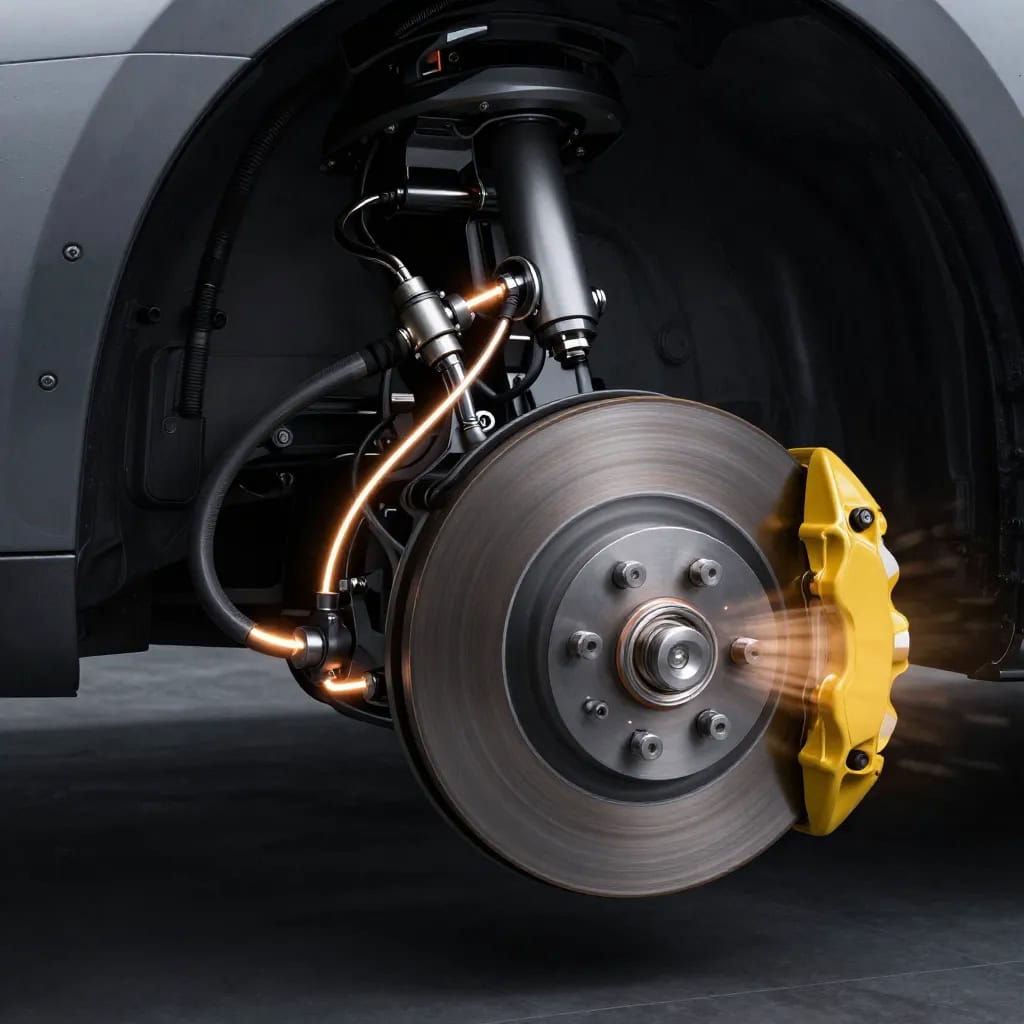
At its core, brake hydraulics operate on Pascal's principle: pressure applied to a confined fluid transmits equally in all directions. When you press the brake pedal, a piston pushes fluid through the system. This pressure travels through rigid tubes and flexible hoses to reach each wheel's caliper or wheel cylinder. The fluid forces pistons within these components outward, pressing brake pads against rotors or shoes against drums.
The relationship between pedal force and clamping force depends on the relative sizes of the master cylinder piston and the caliper pistons. A smaller master cylinder piston generates higher pressure with less pedal travel, potentially making the brake pedal feel firmer but requiring more effort from the driver.
Master Cylinder Sizing
The master cylinder serves as the heart of the hydraulic system, converting mechanical input into hydraulic pressure. Its bore diameter directly affects pedal feel and system efficiency. A larger bore requires less pedal effort but produces lower pressure, potentially increasing pedal travel. A smaller bore creates higher pressure with less pedal movement but demands greater force from the driver.
Engineers must balance these factors based on the vehicle's intended use. Sports cars often use smaller master cylinders for a firmer pedal feel and quicker response, while larger vehicles may employ bigger cylinders to reduce driver fatigue during extended braking.
Line Compliance
Brake lines—both rigid metal tubing and flexible rubber hoses—introduce compliance into the system. Under pressure, these components expand slightly, absorbing some of the hydraulic force. This expansion creates a spongy feel in the brake pedal and slightly delays brake engagement.
High-performance systems minimize line compliance through stainless steel braided hoses that expand less than standard rubber lines. Race cars sometimes use rigid lines throughout to eliminate expansion completely, though this makes the system vulnerable to damage from road vibrations.
ABS Modulation
Anti-lock braking systems (ABS) revolutionized braking safety by preventing wheel lockup during hard braking. ABS operates by rapidly modulating hydraulic pressure to individual wheels using solenoid valves. The system's hydraulic control unit contains accumulators that store brake fluid during pressure modulation, allowing rapid cycling between pressure application and release.
During ABS activation, the driver feels a pulsation through the brake pedal as the system rapidly applies and releases brake pressure. This feedback helps the driver maintain control while the system maximizes braking efficiency.
Brake Feel
Brake feel encompasses the subjective experience of braking—the pedal's firmness, travel distance, and response. This characteristic results from the interaction of multiple hydraulic components: master cylinder sizing, line compliance, caliper design, and fluid characteristics.
Manufacturers tune hydraulic systems to match vehicle characteristics. Luxury cars often prioritize smooth, progressive braking with a softer pedal, while performance vehicles favor immediate response with minimal pedal travel. Electric vehicles present additional challenges, as they lack engine braking and regenerative systems that contribute to feel.
Conclusion
Brake hydraulics represent a sophisticated balance of physics and engineering. From master cylinder sizing to line compliance and ABS modulation, each component affects how a vehicle's braking system performs and feels. Understanding these relationships helps appreciate why braking differs across vehicles and underscores the complexity of creating a system that delivers both performance and safety.
As vehicles evolve toward electrification and autonomous driving, brake hydraulic systems continue to adapt, maintaining their fundamental role in vehicle control while integrating with new technologies that shape the future of transportation.