Chime trains represent one of the most fascinating aspects of mechanical horology, transforming timekeeping from a silent function into an auditory experience. These complex mechanical systems work in harmony with the clock's movement to produce distinctive musical sequences that mark the passage of time. The precision engineering behind chime trains involves intricate gear trains, specialized levers, and carefully tuned hammers that strike tuned rods or bells. This article explores the technical mechanisms that enable these musical timepieces to function with both accuracy and beauty.
The Basics of Chime Trains
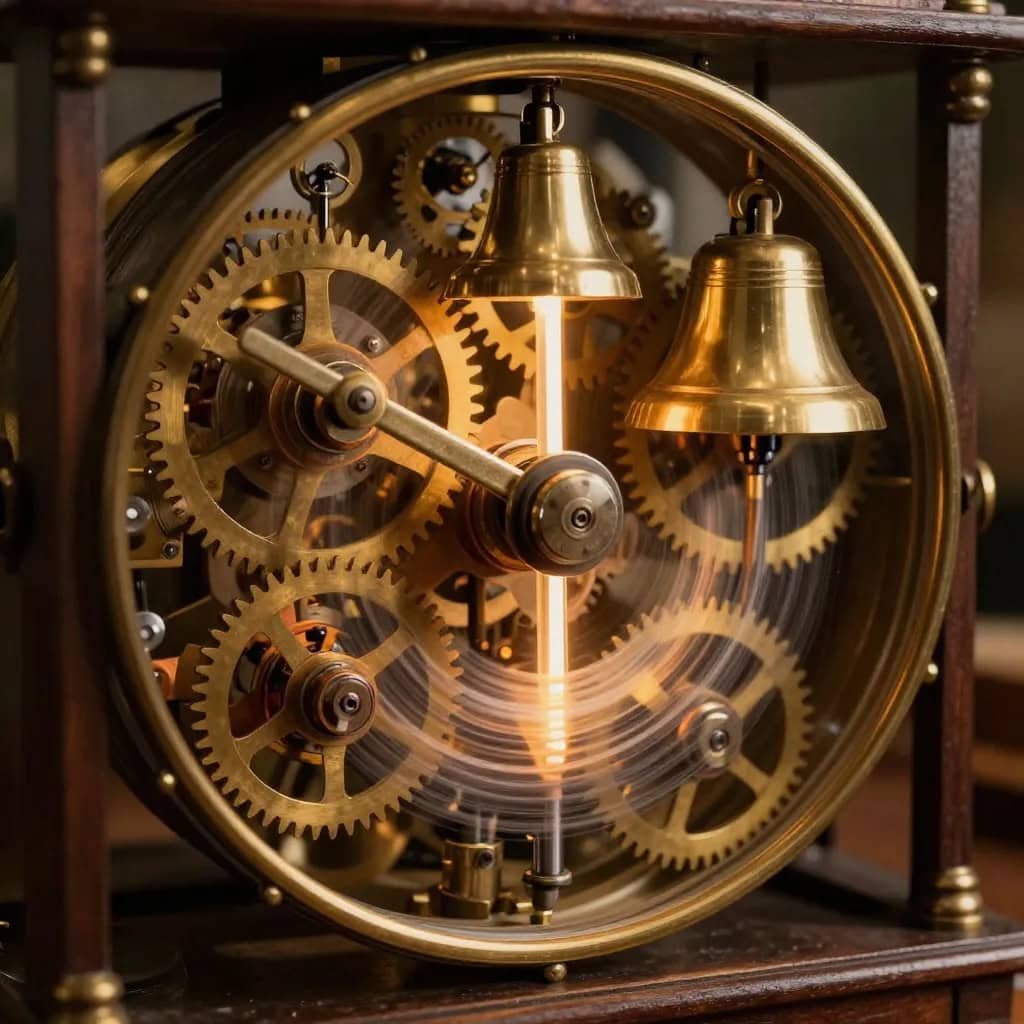
At their core, chime trains are mechanical systems that translate the rotational energy from a clock's main movement into precise, timed musical sequences. These trains typically consist of a series of gears, levers, and hammers that work together to produce specific notes at particular intervals. The most common chime sequences include Westminster, St. Michael, and Whittington patterns, each with its own distinctive musical signature.
The chime train connects to the clock's main movement through a detent mechanism, which allows the train to engage only at specific intervals—typically on the hour, half-hour, or quarter-hour. This engagement ensures that the chimes occur at the correct time while preventing the train from operating continuously, which would quickly deplete the clock's power reserve.
Sequencing Mechanisms
The heart of any chime train lies in its sequencing mechanism, which determines the order in which individual notes are struck. This process relies on a complex arrangement of cams, levers, and hammers that work together to create the desired musical pattern. Each note in the sequence corresponds to a specific position on a rotating cam that activates the appropriate hammer at the precise moment needed.
In Westminster chime clocks, for example, the sequence consists of four different notes repeated three times, followed by a complete hour strike. The cam system must precisely time each hammer's activation to create the characteristic melody. This requires careful calculation of gear ratios and cam profiles to ensure each note occurs at exactly the right time relative to the others.
The complexity increases in clocks with multiple chime options, such as those that can switch between Westminster and St. Michael sequences. These systems often incorporate additional selector mechanisms that engage different cam profiles depending on the chosen setting.
Locking Mechanisms
Proper operation of chime trains depends on sophisticated locking mechanisms that prevent the train from engaging at improper times or getting out of sequence. These locks work by interrupting the power transmission to the chime train until specific conditions are met—typically when the main movement hands reach the correct position.
One common locking mechanism uses a detent pawl that engages with a ratchet wheel on the chime train. This pawl remains engaged until the clock's main movement advances to the point where the chime sequence should begin, at which point the pawl releases, allowing the chime train to operate for its cycle. Once complete, the pawl re-engages, preventing further operation until the next designated interval.
More complex locking mechanisms may incorporate multiple detents and safety features that prevent the chime train from operating if the main movement stops or if the chime sequence is interrupted. These safeguards protect the delicate chime mechanisms from damage and ensure the clock maintains accurate timekeeping.
Governor Mechanisms
Speed control in chime trains is managed by governor mechanisms, which regulate the rate at which the chime sequence operates. Without proper speed regulation, the chime train might run too quickly, causing hammers to strike their corresponding rods or bells with excessive force, potentially damaging both the mechanism and the musical elements.
The most common type of governor in chime trains is the centrifugal flyball governor. As the chime train accelerates, weighted arms extend outward due to centrifugal force, eventually engaging a brake mechanism that limits the maximum speed. This ensures that each hammer strike occurs at the proper interval and with consistent force, regardless of variations in the clock's power delivery.
Some high-end clocks employ more sophisticated speed regulation systems, such as escapement-based governors that provide even more precise control over the chime train's operation. These systems often incorporate additional complication features, such as silent lever mechanisms that allow the owner to disengage the chimes when desired without stopping the clock's timekeeping function.
Conclusion
Chime trains represent remarkable examples of mechanical engineering, combining precision timing with musical artistry to create timepieces that engage both the eye and the ear. The intricate sequencing, locking, and governor mechanisms work together to ensure these musical clocks function reliably while producing their distinctive auditory signatures. Understanding these technical aspects reveals the depth of craftsmanship involved in creating mechanical timepieces that transcend mere utility to become objects of both technical and aesthetic appreciation. As mechanical horology continues to evolve, chime trains remain among its most compelling expressions of the art and science of timekeeping.