Micro-Electro-Mechanical Systems (MEMS) oscillators have become essential components in modern electronic devices, offering a compact, reliable alternative to traditional quartz crystal oscillators. These tiny devices use vibrating mechanical structures to generate precise timing signals that synchronize operations in everything from smartphones to medical equipment. Despite their advantages, MEMS oscillators face a significant challenge: frequency drift due to temperature variations. This issue becomes particularly problematic in applications requiring high precision over varying environmental conditions. In this article, we explore the various compensation techniques developed to address temperature drift in MEMS oscillators, examining both digital and analog approaches that help maintain accuracy despite environmental changes.
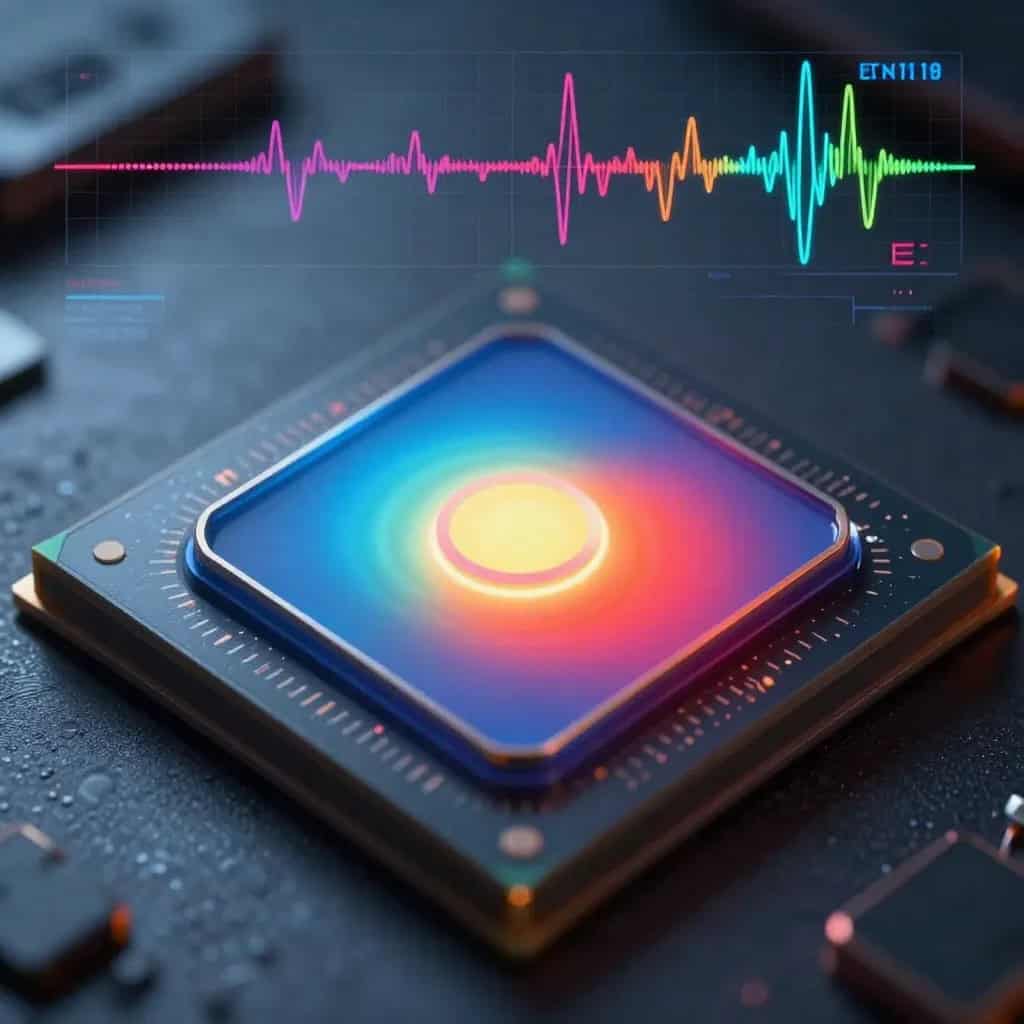
The Challenge of Temperature Drift
Temperature changes affect MEMS resonators in several ways. First, thermal expansion alters the physical dimensions of the resonating structure, changing its natural frequency. Second, temperature variations modify material properties such as Young's modulus, further impacting frequency stability. Third, changes in air density and viscosity around the resonator affect damping characteristics. Together, these effects can cause frequency deviations of up to several thousand parts per million (ppm) across a typical operating temperature range of -40°C to 85°C.
For comparison, high-quality quartz oscillators typically exhibit temperature coefficients around 0.5-1 ppm/°C, while uncompensated MEMS oscillators may range from 10-30 ppm/°C. This difference makes temperature compensation essential for MEMS applications requiring quartz-level precision. The challenge intensifies in applications like GPS receivers, telecommunications infrastructure, and scientific instruments, where timing accuracy directly impacts system performance.
Compensation Mechanisms
Compensation strategies for MEMS oscillators generally fall into three categories: digital, analog, and hybrid approaches. Digital compensation involves measuring temperature and applying correction factors through firmware or digital logic. Analog compensation uses circuit elements with temperature characteristics that counteract the MEMS resonator's drift. Hybrid methods combine these approaches to leverage their respective advantages.
The fundamental principle behind most compensation techniques is to create an opposing frequency variation that cancels out temperature-induced drift. The effectiveness of any compensation method depends on its ability to accurately model the MEMS resonator's temperature behavior and to apply precise corrections across all operating conditions.
Digital Compensation Techniques
Digital compensation methods represent the most flexible approach to addressing temperature drift in MEMS oscillators. These techniques typically involve a temperature sensor adjacent to the MEMS resonator, providing real-time temperature data to a processing element. The system then applies a correction based on either a pre-programmed look-up table or an algorithm.
Look-up tables store measured frequency offset values at specific temperature points, with interpolation used for intermediate temperatures. While effective, this approach requires substantial memory and becomes less accurate if the actual device behavior differs from the characterization sample. Algorithmic compensation, by contrast, uses mathematical models—often polynomial curves—to predict and compensate for frequency drift. These models require fewer parameters than look-up tables but depend on accurate characterization during manufacturing.
Modern digital MEMS oscillators frequently incorporate proprietary algorithms that consider both temperature and aging effects. Some advanced systems even include machine learning capabilities that adapt compensation parameters over time based on actual operating conditions. Digital compensation typically achieves temperature coefficients of 0.5-2 ppm/°C, approaching quartz performance but with increased power consumption and complexity.
Analog Compensation Approaches
Analog compensation techniques offer an alternative to digital methods, using circuit elements with carefully chosen temperature characteristics to counteract MEMS drift. One common approach employs temperature-sensitive capacitors or inductors that create frequency shifts opposing those of the MEMS resonator. These elements are typically integrated into the oscillator's tank circuit or feedback path.
Another analog method uses bimetallic structures that apply mechanical stress to the MEMS resonator as temperature changes, effectively adjusting the resonant frequency. These mechanical compensators can be designed to create nearly linear frequency corrections across broad temperature ranges.
Analog compensation excels in applications with minimal power budgets or space constraints, as it requires no additional processing circuitry. However, its precision is limited by the availability of components with appropriate temperature characteristics and the ability to precisely match these to the MEMS device's behavior. Well-designed analog oscillators typically achieve temperature coefficients of 1-5 ppm/°C, sufficient for many applications but generally not matching the precision of digital methods.
Implementation Considerations
When selecting a compensation approach for a MEMS oscillator, designers must balance multiple factors. Power consumption becomes critical in battery-operated devices, where digital methods may be impractical despite their precision. Size constraints often favor analog solutions, which can be implemented with minimal additional components. Cost considerations also play a significant role, as digital compensation requires more complex manufacturing processes.
Performance requirements vary widely across applications. Consumer electronics may accept ±50 ppm accuracy, while telecommunications equipment often demands ±5 ppm or better. Military and aerospace applications may require specifications approaching ±1 ppm across extreme temperature ranges.
Manufacturing variations present additional challenges. Each MEMS device exhibits unique temperature characteristics due to process variations, necessitating characterization and potentially individual compensation parameter programming. This testing and calibration process adds cost and complexity to production.
Future Trends and Conclusion
The field of MEMS oscillator compensation continues to evolve, with several promising directions emerging. Advanced materials with more predictable temperature characteristics could reduce the complexity of compensation circuits. Improved sensor integration may enable more accurate temperature measurements, directly at the resonating structure.
Machine learning techniques offer potential for adaptive compensation that continuously improves over time, accounting for aging effects and individual device variations. These approaches could eventually enable MEMS oscillators to match or exceed the long-term stability of quartz crystals.
As MEMS technology matures, the distinction between digital and analog compensation methods may blur, with hybrid approaches becoming more common. The growing demand for precise timing in emerging technologies like 5G infrastructure, autonomous vehicles, and quantum computing will continue to drive innovation in this field.
While temperature drift remains a fundamental challenge in MEMS oscillator design, the compensation techniques developed over recent years have enabled these devices to achieve remarkable levels of accuracy. The ongoing refinement of these methods ensures that MEMS oscillators will continue to displace traditional quartz crystals in an expanding range of applications, combining the advantages of miniaturization with ever-improving timing precision.