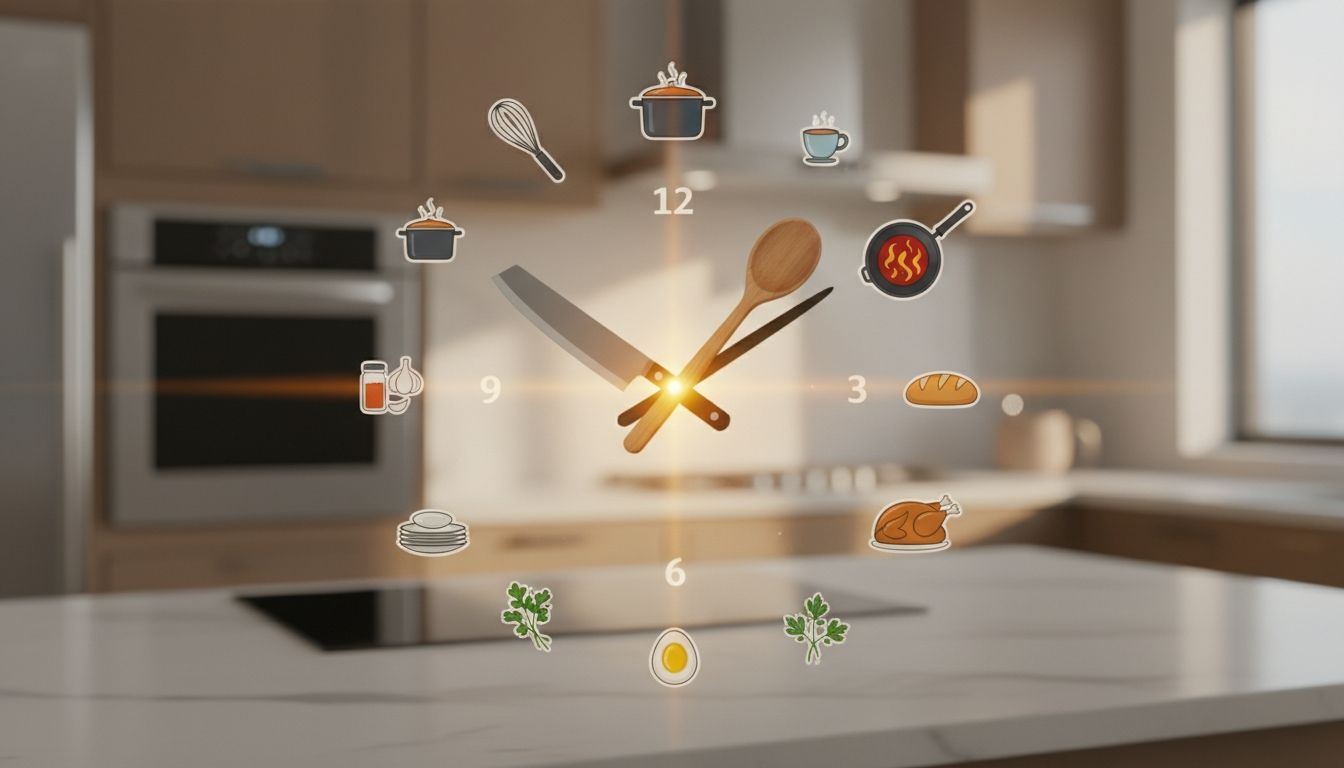
Timing is the invisible conductor in the orchestra of cooking. While we focus on flavors, techniques, and presentations, it is timing that orchestrates when ingredients hit the pan, when sauces reduce, when proteins rest, and when dishes make their way to the table. Professional chefs live and die by their ability to manage time, turning what might seem like chaos into a harmonious flow of delicious creations. This invisible art separates the amateur cook from the seasoned professional, and understanding its principles can transform anyone's cooking experience.
The Science of Timing: Why Time Matters
Cooking is fundamentally a series of chemical and physical transformations that occur over specific time periods. Maillard reactions require just the right amount of time at precise temperatures to create those desirable brown crusts on meats. Caramelization develops when sugars break down under heat, a process that can take minutes or turn to burnt in seconds. Even simple actions like boiling pasta or steaming vegetables depend on timing to achieve perfect texture—undercook them and they're unpleasantly firm; overcook them and they become mushy.
Understanding these scientific processes allows cooks to anticipate timing needs. For instance, knowing that a thick-cut pork chop needs longer than a thin one, or that bringing meat to room temperature before cooking reduces overall cooking time, are insights that come from understanding how heat transfers through different materials at different rates.
The Foundation: Mise en Place and Preparation
Before a single ingredient hits heat, professional chefs focus on preparation. The French term "mise en place," meaning "everything in its place," refers to the organizational system that ensures every ingredient is prepped and ready before cooking begins. This isn't just about cleanliness—it's about timing. When a recipe requires multiple components to be ready simultaneously, preparation must be done in reverse order. Sauces might be finished first, followed by vegetables, with proteins being the last to touch the heat.
Consider a simple roasted chicken dinner. While the chicken roasts, other dishes must be timed to complete at the right moment. The potatoes need to go in the oven earlier than the carrots, which need more roasting time than asparagus. Planning this timing cascade is what separates a smooth, stress-free cooking experience from a frantic, last-minute rush.
Coordinating Multiple Dishes: The Dance of Simultaneity
When cooking multiple dishes for a meal, timing becomes a complex puzzle. Professional restaurants use ticket times—written orders that indicate when each component of a meal should be ready. At home, we can use a similar approach by mentally mapping out which dishes can be held warm and which must be served immediately.
The key is understanding which dishes can be partially prepared ahead of time and which need to be finished just before serving. A gravy can be made hours in advance and reheated, while a delicate sauce like beurre blanc must be prepared moments before serving. Knowing these distinctions allows home cooks to plan their cooking sequence, ensuring that the first dish isn't cold by the time the last is ready.
The Art of Resting: Patience as a Timing Tool
One of the most frequently overlooked aspects of timing in cooking is the resting period. After proteins like meat, poultry, or even large cuts of vegetables are removed from heat, they continue to cook and redistribute their juices. Cutting into a steak immediately after pulling it from the pan releases those precious juices onto the cutting board rather than onto the plate. By allowing the meat to rest for a few minutes, the juices reabsorb into the fibers, resulting in a juicier, more flavorful final product.
Resting times vary by protein—steaks might need 5-10 minutes, larger roasts could require 15-30 minutes or more. Understanding these resting periods is crucial for planning service times and ensuring that food is served at its optimal temperature and texture.
Conclusion
Timing in cooking is both science and art, requiring technical understanding and intuitive feel. It's the difference between a meal that's rushed and stressed, and one that flows with ease and confidence. By mastering timing—through preparation, coordination, patience, and practice—any cook can elevate their dishes from merely good to exceptional. The next time you step into the kitchen, remember that behind every great meal is not just great ingredients and techniques, but also the invisible art of perfect timing.