Twice a year, in the spring and fall, most of us participate in a globally synchronized ritual: changing our clocks. When Daylight Saving Time (DST) begins in March, we "spring forward," losing an hour of sleep but gaining evening light. When it ends in November, we "fall back," reclaiming that lost hour but saying goodbye to those long summer evenings. This practice, now deeply embedded in our lives, has sparked debate for over a century. Let's examine the historical context, claimed benefits, documented drawbacks, and the ongoing conversation about whether DST deserves its place in modern society.
A Brief History
The concept of DST wasn't actually proposed by Benjamin Franklin, as popular belief suggests. While his 1784 essay "An Economical Project" did jest about Parisians saving candle wax by waking earlier, the idea of adjusting clocks to better utilize daylight came later. In 1907, English builder William Willett independently proposed the concept, but it wasn't until World War I that DST was widely adopted as a fuel-conservation measure.
The United States officially implemented DST in 1918, though it's been controversial since the beginning. Federal standardized DST began in 1966 with the Uniform Time Act, but states were allowed to opt-out. Today, the practice varies globally, with some countries adopting it year-round, others not at all, and many changing policies over time based on perceived benefits.
The Case for Daylight Saving Time
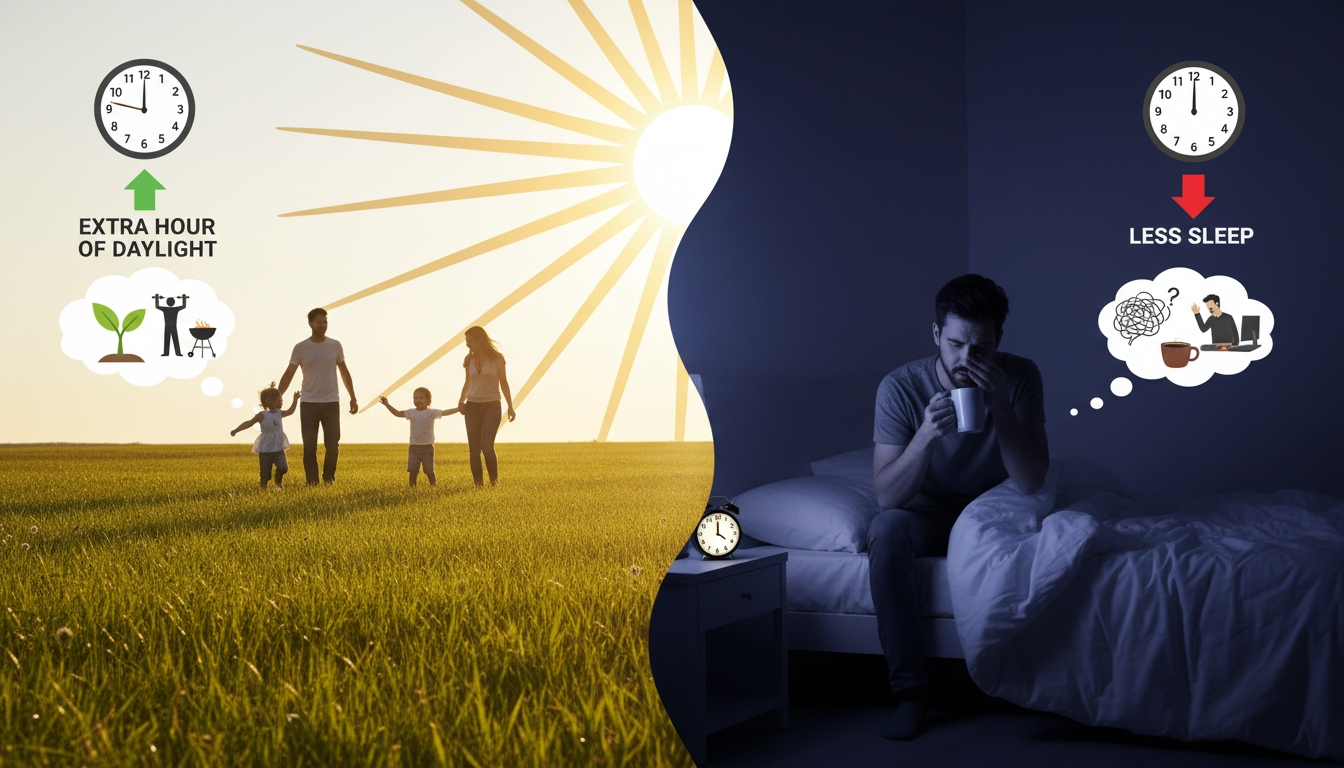
Proponents of DST highlight several advantages. Perhaps most compelling is the extended evening daylight during warmer months. This extra hour of daylight after work and school encourages outdoor activities, socializing, and exercise, potentially improving public health and quality of life. Studies have shown that increased daylight hours correlate with reduced sedentary behavior and improved mental well-being.
Historically, DST was promoted as an energy-saving measure. During World War II, "War Time" was implemented to conserve resources. Studies from the 1970s suggested electricity decreased by about 1% per day during DST months, largely due to reduced lighting needs in the evening. More recent research, however, has complicated this picture, with some studies showing minimal energy savings or even increases in certain regions.
Economically, DST benefits certain industries. Retail, hospitality, and recreation often see increased patronage when daylight extends later into the evening. The outdoor dining industry, golf courses, and even barbecue supply shops report stronger sales during DST months. The tourism industry also benefits, as attractions have more operating hours with natural light.
The Dark Side of the Clock
Despite these benefits, DST has significant drawbacks. Perhaps most concerning are the health impacts. Studies show an increase in heart attacks and strokes in the days following the spring time change, likely due to sleep disruption. The autumn transition correlates with a brief decrease in these events, suggesting our bodies prefer consistent schedules. Research also links the time change to increased mood disturbances and workplace accidents.
Safety concerns also emerge. While some claim DST reduces traffic accidents by increasing visibility during evening commutes, research actually shows an increase in fatal car accidents in the days following the spring time change. The Monday after "springing forward" is particularly dangerous. Workplace injuries also spike during this period, with a 6% increase in injuries and a 68% increase in workdays lost due to injuries.
Agricultural communities have long opposed DST, as farmers' schedules are dictated by sun, not clocks. Livestock don't adjust to time changes, and morning field work must begin an hour earlier during DST months. Dairy farmers report that cows remain on their natural milking schedule, creating logistical challenges.
The Modern Debate
In recent years, the DST debate has intensified. In 2019, the U.S. Senate unanimously passed the Sunshine Protection Act, which would make DST permanent year-round. The House did not take up the bill, but similar legislation has been introduced in subsequent years.
Public opinion is divided. While many enjoy the longer evenings of DST, many dislike the biannual time changes and their associated disruptions. Some regions within the same country have different approaches—Hawaii and Arizona don't observe DST, creating confusion for travelers and businesses.
The scientific community has weighed in, with sleep researchers generally favoring permanent standard time, which better aligns with our natural circadian rhythms. Permanent DST, they argue, would leave children walking to school in darkness during winter months.
Looking Forward
As our society evolves, so too might our approach to timekeeping. Technological advances in lighting and work flexibility may lessen the relevance of seasonal time adjustments. Some companies have already implemented flexible hours that accommodate natural light patterns without requiring legislative change.
The ideal solution may vary by region, considering climate, latitude, and economic factors. What works for Florida might not suit Alaska. The conversation continues, with researchers, policymakers, and citizens weighing tradition against evidence.
Final Thoughts
Daylight Saving Time began as an energy-saving measure during wartime and has persisted despite changing circumstances. While it offers some benefits, particularly in terms of extended evening recreation, the health and safety costs cannot be ignored. As we move forward, the challenge is finding a timekeeping system that serves our modern needs while respecting our biological rhythms and preferences. Perhaps the time has come to stop changing our clocks—for good.