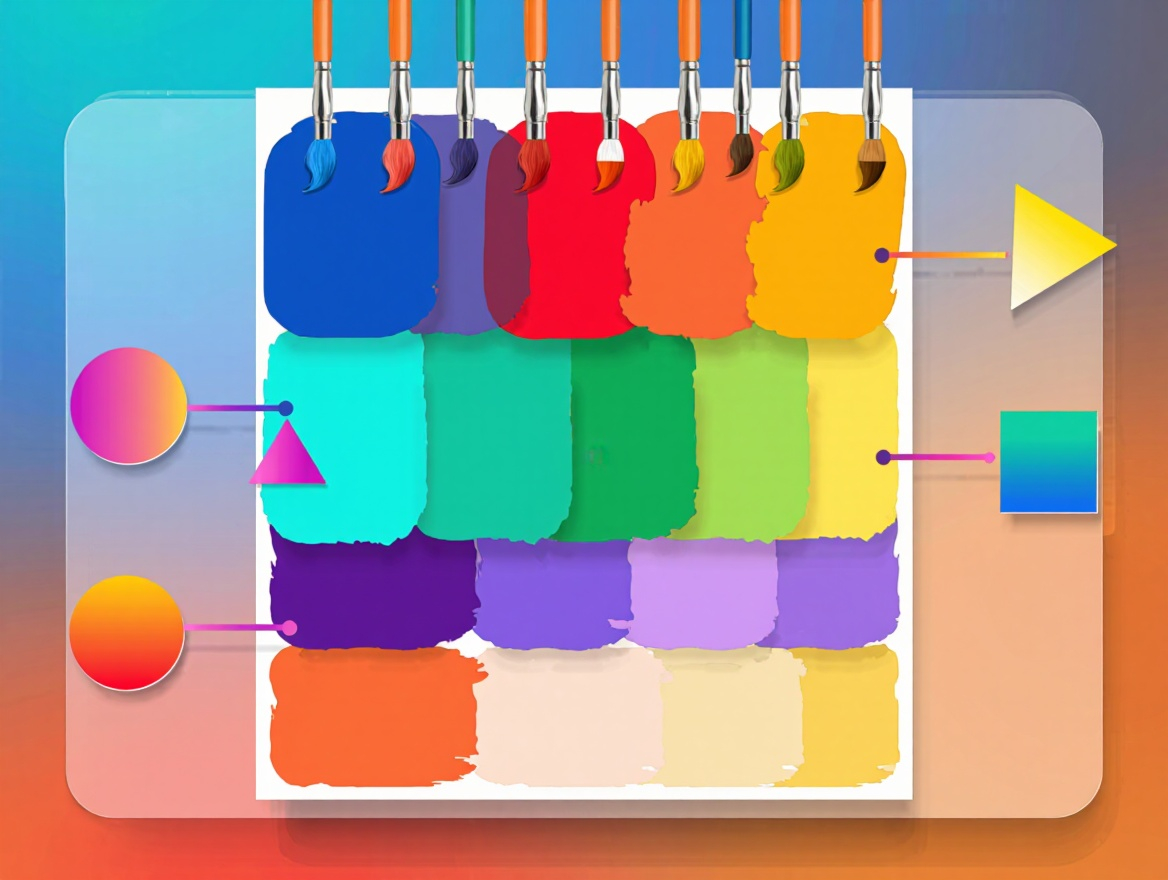
In the luminous glow of our screens, a revolution has been quietly unfolding. Digital painting has transformed from a pixelated novelty into a sophisticated medium that rivals traditional art in depth, expression, and possibility. At the heart of this transformation lies the digital painting palette—a tool far more complex and nuanced than its traditional counterpart. These virtual palettes are not merely collections of colors but intricate ecosystems of brush engines, blending algorithms, and pigment simulations that together create the digital artist's playground.
The Evolution of Digital Color
The journey of digital palettes began with stark limitations. Early paint programs offered little more than a basic color picker and a handful of brush options. Artists worked within rigid constraints, their digital creations often bearing the unmistakable markers of their time—jagged edges, limited color depth, and a uniformity that betrayed their digital origins.
As computing power grew, so did the sophistication of digital palettes. Software developers began collaborating with artists to create tools that could mimic the subtle interactions of physical media. The modern digital palette now encompasses not just color selection but texture libraries, brush dynamics, and complex mixing algorithms that respond to the artist's touch with remarkable sensitivity.
The Intricate Dance of Brush Engines
At the core of any advanced digital painting system lies its brush engine—a complex set of algorithms that determines how digital pigment behaves when applied to the canvas. Unlike their physical counterparts, digital brushes can defy physics while still honoring artistic tradition. They can respond to pressure, tilt, rotation, and velocity, creating marks that feel alive and intentionally imperfect.
Contemporary brush engines model the microscopic interactions between brush hairs and canvas fibers, simulating the way paint spreads, pools, and dries. Some engines even incorporate procedural generation, allowing brushes to evolve and change as they're used, much like how a physical brush wears down over time. This attention to detail transforms the digital painting experience from mechanical to organic, allowing artists to discover happy accidents and unexpected textures within their work.
The Science of Digital Blending
Blending represents one of the most challenging aspects of digital painting to master. In traditional media, colors blend according to the physical properties of pigments and solvents. Digital blending must recreate this phenomenon while offering capabilities beyond what's possible in the physical world.
Modern painting software employs various blending modes that simulate real-world interactions. Some algorithms mimic the way oil paints mix on canvas, creating rich tertiary colors through careful calculation of color theory principles. Others replicate the granular effects of watercolor or the layered transparency of glazing techniques. The most advanced systems even model the drying time of different pigments, allowing artists to work with wet-on-wet or wet-on-dry techniques as they would with traditional media.
Beyond the Spectrum: Realistic Pigment Models
Perhaps the most fascinating development in digital palettes has been the creation of realistic pigment models. Early digital color systems operated within the RGB (red, green, blue) color space—a technical rather than artistic approach. Modern systems, however, increasingly model the behavior of actual pigments, taking into account their lightfastness, opacity, granulation, and staining properties.
These pigment models consider how colors interact under different lighting conditions, how they change when mixed, and how they appear on different grounds. Some software even simulates the chemical interactions between pigments, allowing artists to understand which combinations might degrade over time or produce unexpected results. This scientific approach to color doesn't constrain artists—it liberates them by providing a more intuitive connection between their digital tools and traditional painting knowledge.
Crafting Your Digital Workspace
Choosing and customizing a digital palette is deeply personal. The ideal setup depends on an artist's style, subject matter, and even their emotional connection to certain colors and textures. Many artists begin with pre-made palettes designed to mimic specific media or historical periods, then gradually modify them to suit their evolving needs.
The most effective digital palettes balance organization with inspiration. They provide quick access to frequently used colors while encouraging exploration and experimentation. Some artists arrange their palettes chromatically, while others group colors by value or emotional resonance. The digital format allows for endless reconfiguration, enabling artists to create different workspace layouts for different projects or moods.
The Future of Digital Expression
As we look toward the horizon of digital art, the evolution of painting palettes continues to accelerate. Emerging technologies like machine learning and virtual reality promise even more intuitive and immersive artistic experiences. Imagine palettes that learn from your preferences, suggesting colors and brushes based on your unique style, or virtual studios where the boundaries between digital and traditional dissolve entirely.
Yet despite these technological marvels, the fundamental purpose of the palette remains unchanged: to serve as the bridge between artistic vision and tangible creation. Whether mixing pigments on a traditional wooden palette or selecting colors on a sleek tablet, artists throughout history have shared the same desire—to capture the ineffable beauty of the world through color and form. The digital painting palette, in all its sophisticated glory, is merely the latest chapter in this timeless human endeavor.