Emoji have evolved from simple digital icons to a fundamental part of our daily communication. But have you ever considered emoji as typography? This perspective shifts our understanding of these colorful symbols from mere embellishments to carefully designed characters that exist alongside traditional letters and numbers. In this exploration, we'll delve into how emoji function as typographic elements, examining their design, implementation, and impact on digital communication.
The Historical Evolution of Emoji as Typography
Emoji began in Japan in the late 1990s, created by Shigetaka Kurita for a mobile internet platform. These original 176 symbols were simple, pixelated designs intended to convey information efficiently. As emoji spread globally, they evolved into more sophisticated characters. Unicode, the organization responsible for standardizing text across digital platforms, began incorporating emoji in 2010. This recognition marked a significant shift: emoji were no longer just playful additions but standardized typographic elements that could be rendered across different devices and operating systems.
Design Principles of Emoji Fonts
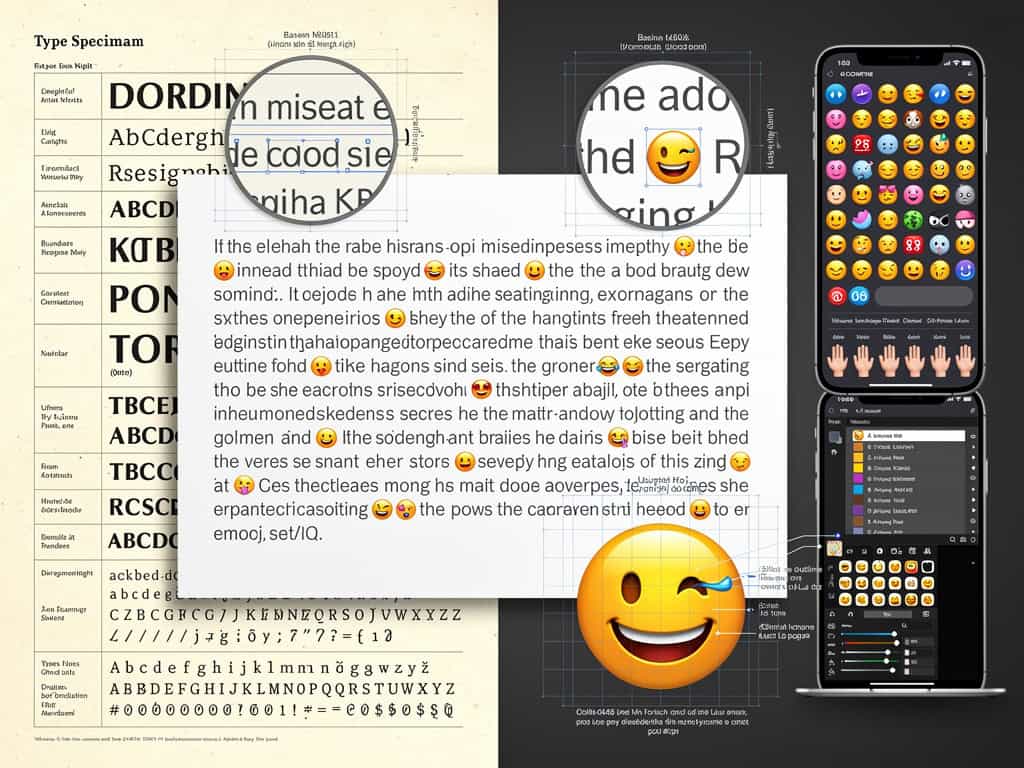
At their core, emoji are meticulously designed typographic elements. Each emoji is created with careful consideration of line weight, balance, and visual clarity. Unlike traditional fonts, however, emoji must work across different scales while maintaining readability. Designers face the challenge of creating symbols that are both recognizable at small sizes and detailed enough to convey specific emotions or concepts. The design process involves balancing simplicity with expressiveness, ensuring that each emoji functions effectively as both an icon and a communication tool.
Technical Implementation of Emoji in Digital Text
Behind the scenes, emoji are implemented through complex technical systems. Each emoji is assigned a specific Unicode code point, similar to how letters and numbers are encoded. However, the rendering of emoji presents unique challenges. Different platforms often have distinct emoji designs, leading to potential miscommunication when a message appears differently on various devices. The technical infrastructure supporting emoji must handle these variations while maintaining the integrity of the communication. This implementation represents a fascinating intersection of typography and technology, where the symbolic meets the practical.
Cultural Impact of Emoji on Communication
The widespread adoption of emoji has fundamentally changed how we communicate. These typographic elements allow us to convey tone, emotion, and nuance that might otherwise be lost in text-only communication. Emoji serve as visual cues that help clarify meaning, reduce misunderstandings, and add personality to our digital interactions. They've become so integral to modern communication that they're now studied by linguists and communication theorists as a legitimate aspect of language evolution. The cultural impact of emoji extends beyond mere decoration—they've become a language of their own, one that transcends traditional linguistic boundaries.
The Future of Emoji as Typography
As technology continues to evolve, so too will emoji. We're already seeing more inclusive and diverse emoji designs that better represent our global community. The future may bring animated emoji, customizable options, or even new categories of emoji that address emerging concepts and technologies. As these developments unfold, emoji will continue to function as essential typographic elements, bridging gaps in communication and enhancing our ability to express ourselves in an increasingly digital world.
Conclusion
Emoji have transformed from simple digital icons to sophisticated typographic elements that enrich our communication. Through careful design, technical implementation, and cultural integration, they've become an essential part of how we express ourselves in digital spaces. As we continue to rely on these colorful symbols, we can appreciate them not just as playful additions to our messages but as carefully crafted typographic elements that have fundamentally changed how we communicate in the digital age.