Fluid dynamics forms the backbone of many engineering applications, from aircraft design to water distribution systems. At the heart of understanding fluid behavior lies Bernoulli's equation, a fundamental principle that describes the relationship between pressure, velocity, and elevation in a flowing fluid. This equation, developed by Swiss mathematician Daniel Bernoulli in the 18th century, continues to provide insights into how fluids move and interact with their surroundings.
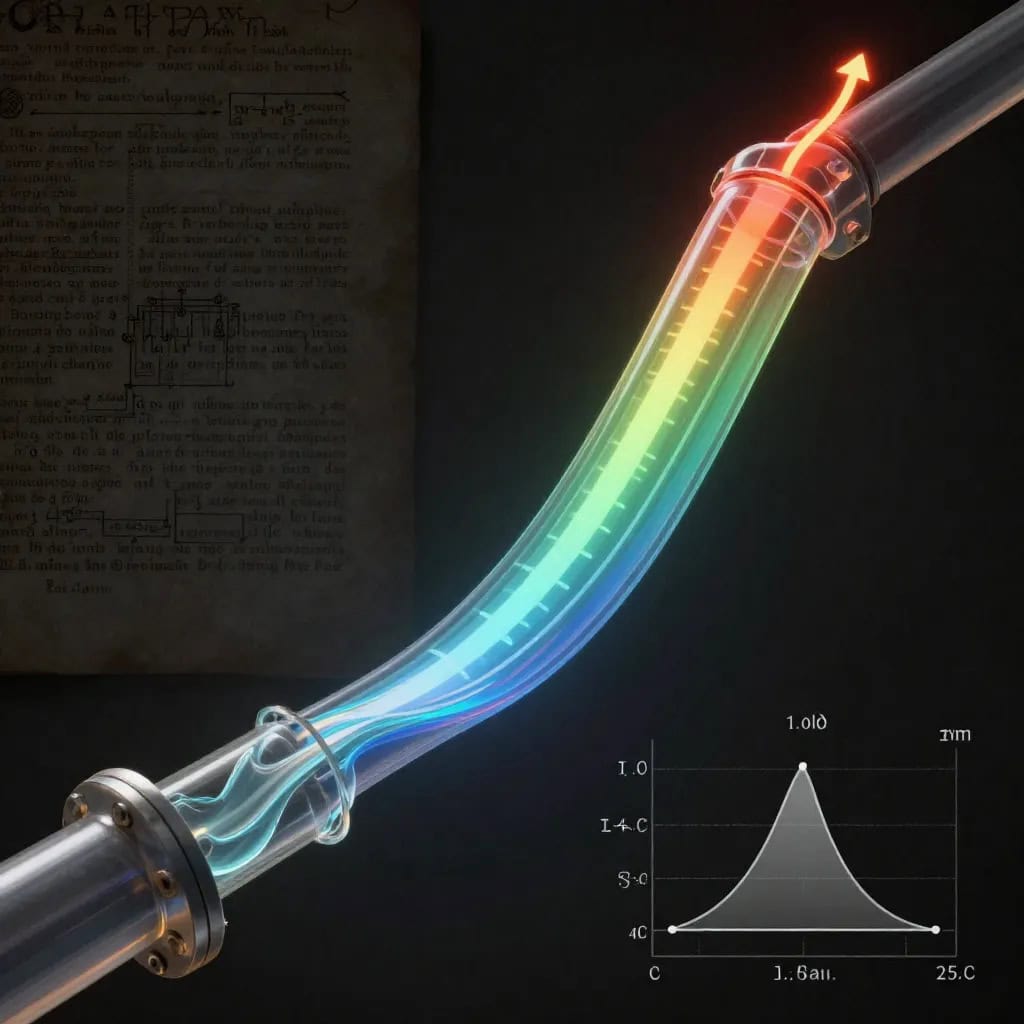
Understanding Bernoulli's Principle
Bernoulli's equation states that for an incompressible, inviscid fluid, the total energy along a streamline remains constant. The equation is typically written as:
P + ½ρv² + ρgh = constant
Where:
- P represents static pressure
- ρ is fluid density
- v is fluid velocity
- g is gravitational acceleration
- h is height above a reference point
This elegant equation reveals that energy in a fluid system exists in three forms: pressure energy, kinetic energy, and potential energy. When one form increases, the others must decrease to maintain the total energy balance—a concept known as the Bernoulli principle.
Static vs Dynamic Pressure
In fluid dynamics, understanding the distinction between static and dynamic pressure is crucial. Static pressure represents the potential energy of a fluid, the force exerted perpendicular to the flow direction. It's what pressure gauges measure when they are stationary relative to the fluid.
Dynamic pressure, represented by ½ρv² in Bernoulli's equation, quantifies the kinetic energy of the fluid. This pressure component increases with fluid velocity and is responsible for phenomena like lift on an airplane wing.
The total pressure, also called stagnation pressure, is the sum of static and dynamic pressures. When fluid velocity decreases, static pressure increases, and vice versa. This inverse relationship between pressure and velocity is the essence of pressure-velocity tradeoffs in fluid flow.
The Venturi Effect
One of the most practical demonstrations of Bernoulli's principle is the Venturi effect. When fluid passes through a constricted section of a pipe, its velocity increases while pressure decreases. This phenomenon occurs because the same amount of fluid must pass through the constriction in the same time period, forcing the fluid to accelerate.
Venturi meters utilize this effect to measure flow rates. As fluid enters the constricted section, velocity increases and pressure drops. By measuring the pressure difference between the normal section and the constriction, engineers can calculate the fluid velocity and flow rate.
The Venturi effect also explains why windows may break during hurricanes. The high-speed wind outside creates low pressure, while the relatively still air inside maintains normal atmospheric pressure. This pressure difference can cause windows to blow outward.
Nozzles and Diffusers
Nozzles and diffusers perfectly illustrate pressure-velocity tradeoffs in engineering applications. A nozzle is a device designed to increase fluid velocity while decreasing pressure. Its converging shape accelerates the fluid, converting pressure energy into kinetic energy.
Conversely, a diffuser slows down fluid while increasing pressure. With its diverging shape, the diffuser converts kinetic energy back into pressure energy. This principle is essential in jet engines, where diffusers slow incoming air before compression.
These devices demonstrate the practical application of Bernoulli's equation. By carefully designing the geometry, engineers can control the pressure-velocity relationship to achieve desired fluid behavior in various systems.
Real-World Applications
Bernoulli's equation finds applications across numerous fields:
Aerodynamics: The shape of an airplane wing creates longer path for air to travel over the top surface, increasing velocity and decreasing pressure. This pressure difference generates lift.
Carburetors: Older automobile engines used Venturi tubes in carburetors to mix fuel and air. As air passed through the constriction, its pressure dropped, drawing fuel into the airflow.
Atomizers: Perfume bottles and spray paint cans use Bernoulli's principle. Pressurized air forced through a narrow tube creates low pressure that draws liquid up and breaks it into a fine spray.
Sailing: The curved shape of a sail creates pressure differences that generate forward force, allowing sailboats to travel against the wind.
Conclusion
Bernoulli's equation provides a fundamental framework for understanding fluid behavior and the relationship between pressure and velocity. From the Venturi effect in flow measurement to the lift generation on aircraft wings, this principle continues to influence engineering design and innovation.
By recognizing how pressure and velocity trade off in fluid systems, engineers can optimize everything from plumbing networks to aircraft performance. The next time you see an airplane take off or use a garden spray nozzle, consider the elegant physics of Bernoulli's equation at work.
Understanding these relationships not only helps solve practical engineering problems but also deepens our appreciation for the mathematical principles that govern the physical world around us.