Calibration stands as a fundamental process in precision engineering, ensuring that electronic systems maintain accuracy over time and environmental changes. The challenge manifests differently across various technologies—mechanical systems require physical adjustment, while electronic systems demand fine-tuning of components that drift from their original specifications. This article explores two primary calibration domains: hardware calibration through crystal trimming and software-based approaches that compensate for hardware limitations. Both methods address the same fundamental issue: maintaining system accuracy in the face of inevitable imperfections.
Analog Trimming Techniques
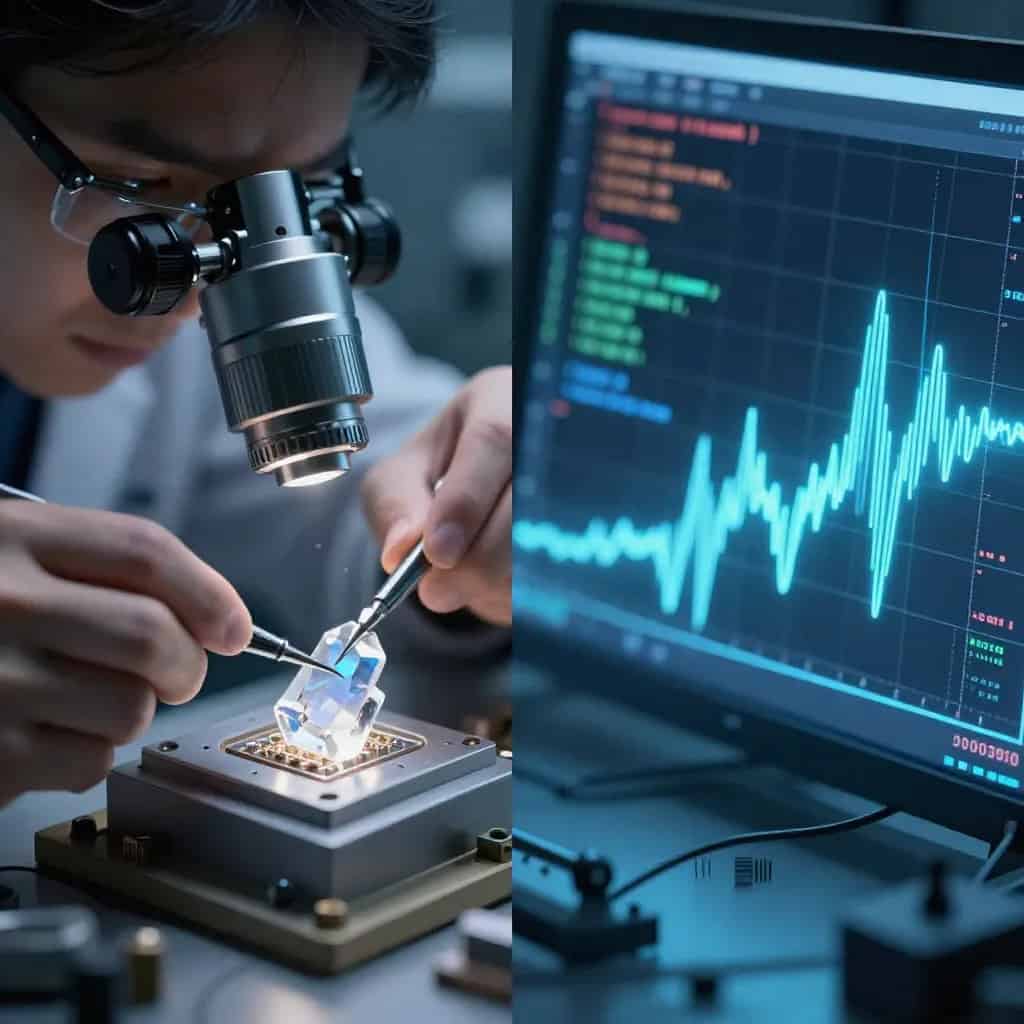
Analog trimming represents the most traditional approach to calibration, involving physical modification of components to achieve desired performance characteristics. In crystal-based systems, this often means carefully scraping away microscopic amounts of quartz material to adjust the resonant frequency. The process requires skilled technicians using specialized tools to make incremental changes while continuously measuring output.
The advantages of analog trimming lie in its simplicity and reliability. Once properly calibrated, these systems require minimal intervention and maintain their settings without additional power or computational resources. This approach has served the electronics industry for decades, particularly in applications where power efficiency and stability are critical.
However, analog trimming possesses significant limitations. The physical nature of the adjustment makes it impractical for field calibration, as it requires specialized equipment and expertise. Environmental factors such as temperature fluctuations can still cause drift, requiring periodic recalibration. Furthermore, the process becomes increasingly challenging as component miniaturization advances, leaving less room for physical adjustment.
Digital Compensation Methods
Digital compensation offers a more flexible alternative to physical trimming. Rather than modifying the hardware, these techniques use software algorithms to detect and correct deviations from expected performance. The system continuously monitors output parameters and applies corrective adjustments through software-based filters or lookup tables.
Implementation typically begins with characterizing the specific device's error profile—measuring how much it deviates from ideal behavior across operating conditions. This characterization data informs compensation algorithms that can adjust outputs in real-time. For crystal oscillators, this might involve adjusting time stamps or frequency multipliers to counteract measured drift.
Digital compensation excels in applications where calibration must adapt to changing conditions or where individual device variation is significant. The approach enables mass production with consistent performance despite component tolerances. It also allows for remote updates, enabling calibration improvements without physical access to devices.
The primary drawback is computational overhead. Compensation algorithms consume processing resources and power, making them less suitable for battery-operated or extremely power-constrained applications. They also introduce latency, which can be problematic in time-critical systems.
Servo Control Systems
Servo control systems represent the most sophisticated calibration approach, employing closed-loop feedback to maintain constant performance. These systems continuously measure output parameters and make dynamic adjustments to maintain desired performance within tight tolerances.
In crystal oscillator calibration, a servo system might measure temperature, voltage, and other environmental factors, then apply compensating voltages to the crystal's load capacitors to maintain frequency stability. The system responds in real-time to changing conditions, maintaining accuracy regardless of external influences.
Servo systems deliver exceptional precision and adaptability, making them ideal for high-performance applications like telecommunications, aerospace, and scientific instruments. The continuous monitoring and adjustment capability allows these systems to compensate for aging effects and environmental changes that other approaches cannot address.
The trade-offs include increased complexity, power consumption, and cost. Servo systems require additional sensors, processing capabilities, and often additional hardware components, increasing both implementation difficulty and system size. The continuous operation also contributes to higher power consumption, limiting applications in battery-powered devices.
The Intersection of Hardware and Software Calibration
Modern systems increasingly combine hardware and software calibration approaches to achieve optimal results. Hybrid systems might use analog trimming for initial calibration, supplemented by digital compensation for environmental adaptation. This strategy leverages the stability of hardware solutions with the flexibility of software techniques.
One effective approach is using machine learning to identify patterns in system behavior that traditional compensation methods miss. By analyzing operational data over time, these systems can develop increasingly accurate compensation models that account for subtle effects not evident during initial calibration.
The most advanced implementations incorporate edge computing capabilities, allowing devices to perform their own calibration without external intervention. These self-calibrating systems represent the future of precision engineering, capable of maintaining accuracy throughout their operational lifespan with minimal human intervention.
Conclusion
Calibration techniques continue to evolve as technology advances, with each approach offering distinct advantages for specific applications. Analog trimming provides reliable, stable calibration for critical systems where power efficiency is paramount. Digital compensation offers flexibility and adaptability, particularly useful in varied environmental conditions. Servo systems deliver unparalleled precision for applications requiring the highest accuracy.
The optimal calibration strategy depends on numerous factors including power constraints, required precision, environmental conditions, and cost considerations. As technology progresses, the boundaries between these approaches continue to blur, with hybrid systems leveraging the strengths of multiple techniques. In the quest for precision engineering, understanding these calibration methods remains essential for designing systems that perform reliably across their operational lifespan.