Combined cycle power plants represent one of the most efficient methods of electricity generation today. These plants utilize both gas and steam turbines to produce power, with the steam portion often operating at multiple pressure levels to maximize efficiency. Understanding how these different pressure levels function provides insight into modern power generation technology.
High-Pressure Steam Loops
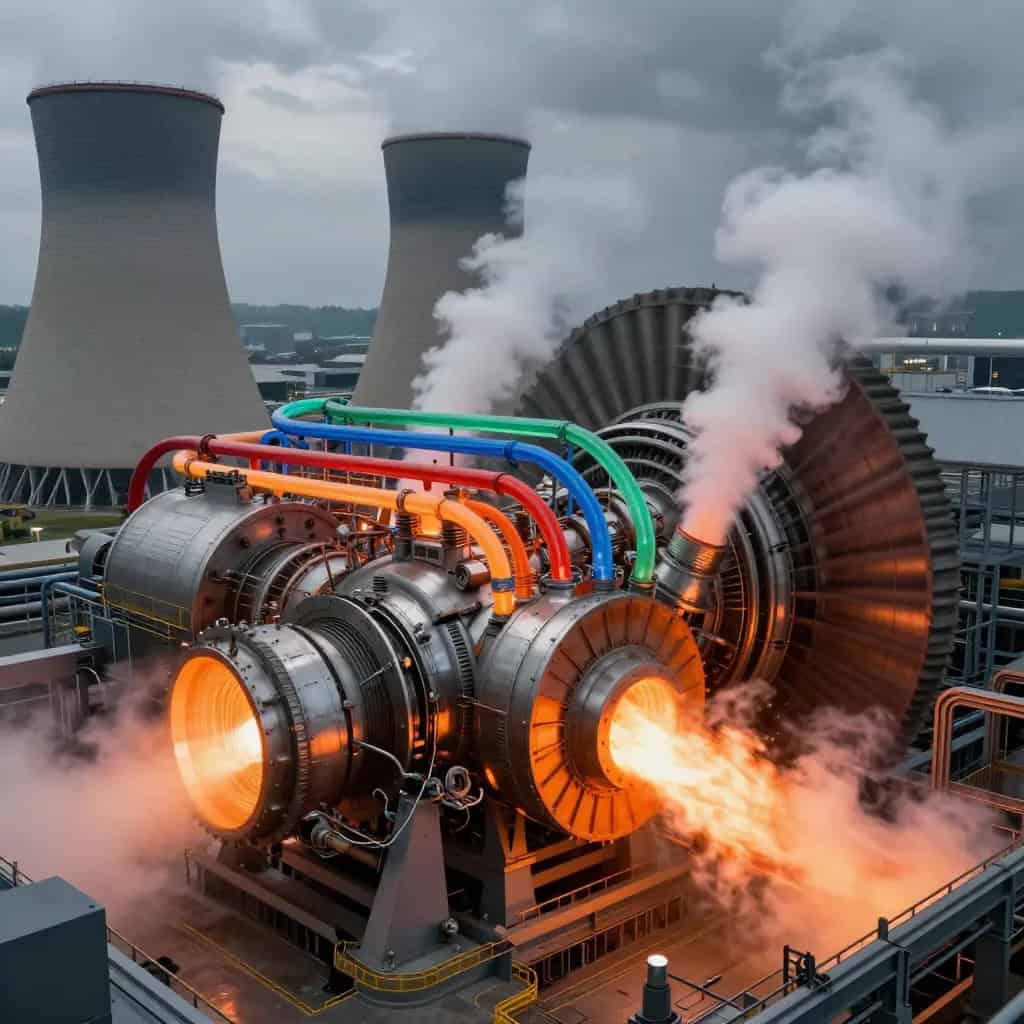
The high-pressure steam loop in a combined cycle plant typically operates at pressures ranging from 1,500 to 2,500 psi with temperatures around 1,000°F. This steam is generated in the heat recovery steam generator (HRSG) using the exhaust gases from the gas turbine. The high-pressure section extracts the maximum energy from these hot exhaust gases while they are still at their highest temperatures. This section typically includes economizers, evaporators, and superheaters designed to maximize heat transfer efficiency.
The high-pressure steam drives the first stage of the steam turbine, extracting approximately 15-25% of the total steam turbine power output. The turbine sections designed for high-pressure steam feature specialized materials and blade geometries to withstand the extreme conditions while maintaining efficiency.
Intermediate-Pressure Steam Loops
After passing through the high-pressure turbine section, the steam is redirected through the intermediate-pressure loop. This section operates at pressures around 300-600 psi and temperatures of approximately 600-700°F. The intermediate-pressure section represents a crucial transition between the high-energy extraction phase and the final low-pressure phase.
In this stage, the steam undergoes reheating in the HRSG before entering the intermediate-pressure turbine section. This reheating process improves overall cycle efficiency by preventing moisture buildup in the later turbine stages. Reheating typically adds 3-5 percentage points to the overall plant efficiency compared to a single-pressure system.
Low-Pressure Steam Loops
The final stage of steam utilization occurs in the low-pressure loop, operating at pressures below 100 psi and temperatures around 300-400°F. This section extracts the remaining energy from the steam as it expands through the final turbine stages. The low-pressure section typically contributes 40-50% of the total steam turbine power output due to the large volume of steam at these conditions.
Special design considerations apply to the low-pressure section, including longer blade lengths and advanced moisture removal systems. The casing design must accommodate the significant increase in steam volume expansion that occurs at these lower pressures. Despite the lower energy content per unit mass of steam, this section contributes substantially to overall power output due to the large mass flow rates.
Thermodynamic Principles Behind Multiple Pressure Levels
The efficiency gains achieved through multiple pressure levels stem from fundamental thermodynamic principles. The Rankine cycle efficiency improves when heat is added at the highest possible temperature and rejected at the lowest possible temperature. By implementing multiple pressure levels, the HRSG can more closely match the temperature profile of the exhaust gases from the gas turbine.
The pinch point difference—the minimum temperature difference between the exhaust gas and the steam/water in the HRSG—varies across different pressure levels. Multiple pressure levels allow for optimized pinch point differences throughout the HRSG, reducing exergy losses and improving overall heat recovery efficiency.
Pressure level optimization involves balancing the capital costs of additional components against the efficiency gains. Most modern combined cycle plants use triple-pressure systems with reheat, which typically achieve plant efficiencies of 60-63% on a lower heating value basis, compared to 45-50% for simple-cycle gas turbines.
Conclusion
The implementation of multiple steam pressure levels in combined cycle plants represents a sophisticated approach to maximizing efficiency in power generation. Each pressure level serves a specific thermodynamic purpose, from high-pressure extraction of maximum energy to low-pressure utilization of remaining steam potential. The careful integration of these pressure levels allows modern combined cycle plants to achieve efficiency levels unattainable with single-pressure systems.
As energy demands continue to grow and environmental concerns increase, the importance of maximizing efficiency in power generation becomes ever more critical. Understanding the role of steam pressure levels provides insight into how engineers continue to push the boundaries of what is thermodynamically possible in electricity generation.