Concrete formwork serves as the mold that holds fresh concrete in place until it hardens into the desired shape. The pressure exerted by the concrete during placement and compaction represents a critical consideration in formwork design. Compaction pressure refers to the lateral forces applied to formwork walls as concrete is consolidated to remove air voids and ensure proper density. Understanding these pressures helps engineers design safe, efficient formwork systems that can withstand the forces without failure, ensuring structural integrity and worker safety.
Understanding Compaction Pressure
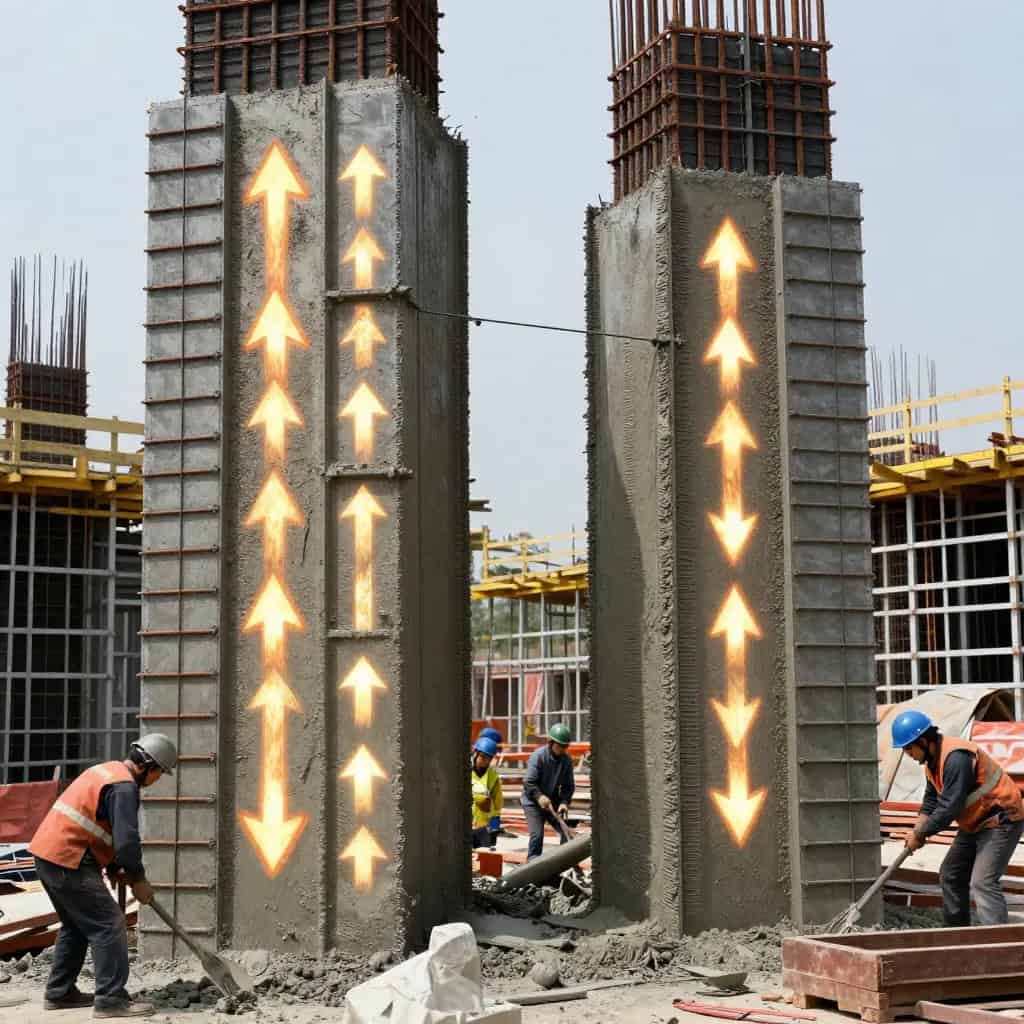
Compaction pressure in concrete formwork results from the lateral forces generated during the consolidation process. Unlike hydrostatic pressure, which increases linearly with depth, compaction pressure depends on several factors including concrete consistency, placement method, vibration frequency, and rate of placement. Concrete with higher slump values generally produces greater lateral pressure due to increased fluidity. The placement method significantly influences pressure distribution; pumping concrete typically generates higher pressures than direct chute placement.
Vibration frequency and amplitude directly affect compaction pressure. Higher frequencies and amplitudes increase the fluidity of concrete temporarily, raising lateral forces against formwork. The rate of placement also plays a role—rapid placement allows less time for pressure dissipation, resulting in higher peak pressures. Temperature and concrete mix design further influence pressure characteristics, with mixes containing supplementary cementitious materials often exhibiting different pressure behaviors.
Measuring Compaction Pressure
Engineers use several methods to measure compaction pressure in formwork systems. Pressure cells and load cells embedded in formwork provide real-time data during concrete placement. These instruments typically consist of diaphragm-type pressure sensors that convert mechanical forces into electrical signals. Modern wireless systems allow remote monitoring of pressure readings throughout the placement process.
Typical compaction pressure values range from 50 to 100 kPa for standard concrete placements, but can reach up to 150 kPa in high-slump concrete or when pumping at significant heights. Researchers have documented pressure variations based on concrete temperature, with cooler mixtures generating higher initial pressures. The American Concrete Institute's ACI 347 provides guidelines for estimating lateral pressures based on concrete placement rate, temperature, and other relevant parameters.
Effects of Compaction Pressure
Excessive compaction pressure can lead to formwork failure through several mechanisms. Bending of formwork panels may occur when pressure exceeds the material's capacity, resulting in misalignment of concrete elements. Ties and connectors represent critical points where failures often initiate, particularly when proper spacing and sizing are not considered. Differential pressure between inside and outside form faces can cause bulging or even complete collapse of form systems.
Pressure-related failures typically manifest as concrete surface irregularities, dimensional inaccuracies, or safety hazards. Severe formwork failures can result in significant economic losses, project delays, and potential injuries or fatalities. Understanding the relationship between concrete properties and pressure generation helps engineers anticipate potential problem areas and implement appropriate safety factors in formwork design.
Managing Compaction Pressure
Proper formwork design accounts for compaction pressure through material selection, structural analysis, and construction techniques. Plywood and steel represent common formwork materials, each with specific pressure-handling capabilities. Engineers calculate required tie spacing based on anticipated pressure values, material strength, and safety factors. The European Standard EN 12812 provides detailed methodology for formwork pressure calculations and safety considerations.
Construction techniques significantly influence pressure management. Controlled placement rates allow pressure to dissipate gradually, reducing peak values. Strategic placement of vibration points helps distribute forces more evenly. Pre-consolidating concrete before final placement can reduce subsequent pressure demands. Monitoring systems that alert workers when pressure approaches predetermined thresholds provide additional safety during concrete placement.
Case Studies and Real-World Applications
Several documented cases illustrate both challenges and solutions related to compaction pressure. In the construction of a high-rise building in Chicago, formwork pressure exceeded design expectations due to unexpected concrete pump heights. Engineers addressed the issue by installing additional support braces and monitoring the situation closely. The project completed successfully with minor concrete surface imperfections that required repair.
A bridge pier construction in Scandinavia demonstrated the effects of cold weather on compaction pressure. Lower concrete temperatures resulted in higher than anticipated lateral forces, causing slight formwork deformation. The incident led to revised pressure calculation methods for cold-weather concrete placements in the region. These experiences highlight the importance of site-specific considerations in formwork design and pressure management.
Conclusion
Compaction pressure represents a critical factor in concrete formwork design that requires careful consideration throughout the construction process. The dynamic nature of these pressures, influenced by concrete properties, placement methods, and environmental conditions, necessitates a thorough understanding of the underlying principles. Modern measurement technologies continue to improve our ability to monitor and manage these pressures effectively.
As construction techniques evolve and concrete mixes become more specialized, the challenge of accurately predicting and managing compaction pressure will remain. Engineers must balance theoretical knowledge with practical experience to develop safe, efficient formwork systems that can withstand the complex forces exerted by fresh concrete during placement and consolidation.